
What Is the Right Age for Play School Admission in Gurgaon?
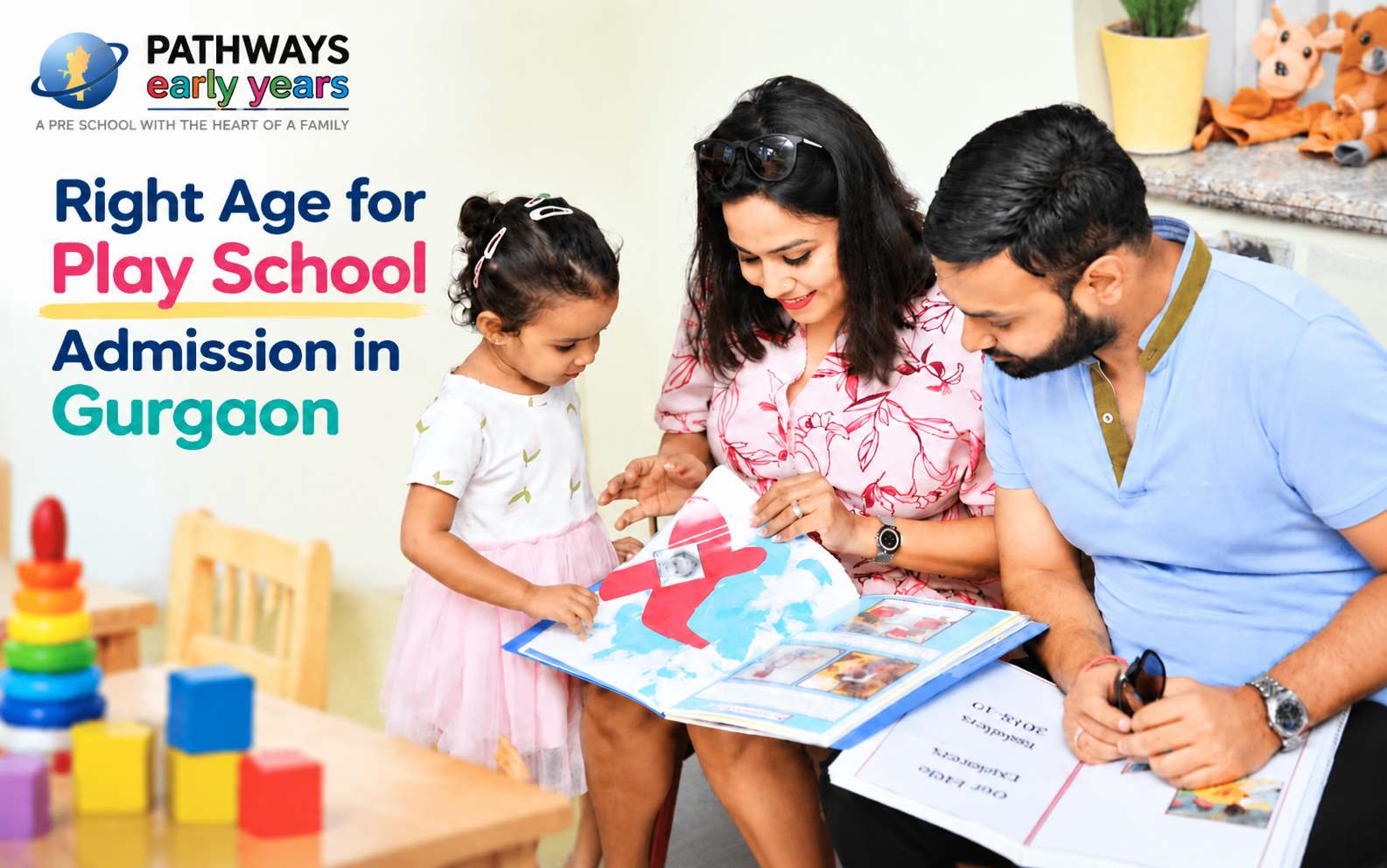
In Gurgaon, most children join play school between 18 months and 2.5 years, pre-nursery at 3 years, and nursery at 4 years as of 31 March. Age sets the boundary, but readiness decides the right moment for your child.
You are standing at a school gate in Sector 55, watching toddlers walk in holding their bags. Your own child is at home, and the same question keeps returning. Is she old enough for this? The right age for play school admission in Gurgaon is not one fixed number, and that is precisely what makes the decision feel so difficult.
Some children settle happily into a classroom at two. Others need another six months at home before they are ready. Admission age criteria give you the outer limits. Readiness tells you the real answer. This guide covers both, so you can decide with confidence rather than guesswork.
Key Takeaways
• Play school starts earliest. Most Gurgaon preschools accept children from 18 months into toddler or playgroup programmes, provided the child can manage short separations.
• Pre-nursery is the 3-year mark. This is where structured early learning genuinely begins, with a longer day and a settled routine.
• Nursery follows at 4 years. Most schools calculate age as on 31 March of the admission year, so a March birthday can change your child’s cohort entirely.
• NEP 2020 shifted the framework. The foundational stage now covers ages 3 to 8, and Class 1 entry is recommended at 6 years or above.
• Readiness beats the calendar. A child who communicates basic needs, separates without prolonged distress, and shows curiosity about other children is ready, whatever the birth certificate says.
What Is the Right Age for Play School Admission in Gurgaon?
The right age for play school admission in Gurgaon usually falls between 18 months and 2.5 years for the earliest programmes. From there, children move up roughly one level each year until they enter formal schooling at around six.
Schools across Golf Course Road, DLF Phase 5 and Sushant Lok 2 broadly follow the same age ladder, though programme names differ. Here is how the stages line up.
Programme | Recommended Age | Key Developmental Milestones | Learning Focus |
Holding Hands (parent and child) | 12 to 24 months | Walking steadily, pointing, responding to name, early words | Sensory play with a parent present, first social exposure, building trust in a new space |
Pre-Toddler | 18 months to 2 years | Short separations tolerated, simple instructions understood, scribbling | Gentle routine, music and movement, gross motor play, settling in without a parent |
Toddler / Playgroup | 2 to 3 years | Two to three word sentences, parallel play, growing independence | Sharing, early language, fine motor control, first classroom routines |
Pre-Nursery | 3 to 4 years | Full sentences, toilet independence, cooperative play begins | Pre-literacy, pre-numeracy, structured inquiry, longer attention spans |
Nursery | 4 to 5 years | Follows multi-step instructions, forms friendships, holds a pencil correctly | Phonics, number sense, group projects, self-management |
Kindergarten | 5 to 6 years | Reads simple words, writes name, sustained focus for 20 minutes | School readiness, early reading and writing, transition to formal schooling |
The 18 Month to 2 Year Window
This is the earliest entry point and the one parents debate most. At this age the goal is not academic. It is exposure. Your child learns that a room full of other children is safe, that an adult who is not a parent can be trusted, and that a routine has a rhythm.
Many families in Gurgaon start here because both parents work. A quality pre-toddler programme at this age keeps groups small and days short, so the child is never overwhelmed.
The 2 to 3 Year Window
Language accelerates sharply during this year. Children move from single words to short sentences, and from playing beside other children to playing with them. A playgroup setting gives that shift somewhere to happen.
If your child is already asking about other children, or copying older siblings, this is usually the natural moment to begin.
The 3 to 4 Year Window
Pre-nursery admission age is where most Gurgaon schools formalise their intake. The day is longer, the structure is clearer, and pre-literacy work begins. Children who joined a play school earlier tend to settle into this stage quickly.
Starting fresh at three is completely normal too. Many children who begin here catch up within a term.
Age Criteria vs Developmental Readiness: How Do You Know If Your Child Is Ready?
A child is ready for preschool when they can separate from a parent without prolonged distress, communicate a basic need, and show interest in other children. Age tells you which class they qualify for. These signs tell you whether they will thrive in it.
Work through the four areas below honestly. You are not looking for perfection in every box.
Emotional Readiness
• Can spend two to three hours with a familiar non-parent, such as a grandparent, without becoming inconsolable
• Recovers from being upset within a few minutes when comforted
• Shows curiosity rather than only fear in unfamiliar places
Communication
• Can indicate hunger, thirst, or the need for a toilet, through words, signs or gestures
• Responds when their name is called
• Follows a simple one-step instruction, such as bringing a shoe
Social Curiosity
• Watches other children with interest at a park or family gathering
• Attempts to join in, even briefly
• Tolerates an adult other than a parent leading an activity
Physical Independence
• Walks and climbs confidently
• Can hold a cup or spoon, even messily
• Manages a nap or rest without needing to be held
If most of these are in place, your child is ready. If several are not, waiting one term rarely does any harm and often makes the transition far smoother.
Understanding Gurgaon Admission Age Norms and Cutoff Guidelines
Most Gurgaon schools calculate admission age as on 31 March of the academic year the child is joining. A child turning three on 15 March qualifies for pre-nursery that year. A child turning three on 15 April usually waits for the next cycle.
That single date matters more than parents expect. It can place two children born five weeks apart into different cohorts for the rest of their schooling.
What NEP 2020 Changed
The National Education Policy 2020 restructured early education around a foundational stage covering ages 3 to 8. This groups three years of preschool with Classes 1 and 2, treating them as one continuous phase rather than separate worlds.
The policy also reinforced that Class 1 entry should happen at age 6 or above. Working backwards, that places nursery at four and pre-nursery at three for most children.
How International Early Years Centres Handle Age
International and inquiry-led centres often apply age bands with more flexibility than the strict cutoff model. Placement may consider developmental readiness alongside the birth date, particularly for children born close to the cutoff.
Always confirm the specific cutoff with the school directly. Policies vary between institutions, and they are revised more often than most parents realise.
Why an International Early Years Framework on Golf Course Road Matters
An inquiry-based early years framework teaches children to ask questions before it teaches them to recite answers. For a two or three year old, that difference shapes how they approach learning for years afterwards.
Inquiry-Based Play Instead of Rote Learning
In a rote model, a child repeats the alphabet until it sticks. In an inquiry model, a child sorts objects by their first sound, and the alphabet arrives as a by-product. The second approach takes longer and holds far better.
Sensory Learning Builds the Foundation
Young children learn through their hands, ears and eyes long before they learn through worksheets. Water play, clay, sand and music are not filler activities. They are how a toddler brain builds the connections that later support reading and mathematics.
Motor Skills Come Before Handwriting
A child cannot hold a pencil correctly until the small muscles in the hand are ready. Threading beads, tearing paper and using tongs build that strength. Schools that rush to formal writing often create frustration instead of progress.
Parents comparing preschools on Golf Course Road often find that the teaching approach, not the facilities, is what separates one campus from another. Ask to observe a class in session before you decide.
How Pathways Early Years, Golf Course Road Nurtures Young Learners
Pathways Early Years sits on Golf Course Road in Sector 55, Gurugram, within reach of Sushant Lok 2, DLF Phase 5, Sector 54 and Sector 56. The centre works with children from around one year through to six, which means a child can move through every early stage without changing campus.
Small Groups and Familiar Faces
Young children settle faster when they see the same adults each day. Keeping group sizes manageable allows educators to learn each child’s temperament, not just their name.
Integrated Daycare for Working Parents
Preschool hours run in the morning, with day care extending into the evening for families who need it. Afternoon day care is also open to children aged two to six who attend other schools, which helps parents who need cover only after school hours.
Not sure whether you need daycare, preschool, or both? Read our guide on daycare vs preschool in Gurgaon.
Safety and Hygiene as a Daily Routine
Safety in an early years setting is procedural rather than promotional. It looks like documented entry and exit, monitored spaces, sanitised play equipment and staff trained in first aid. Ask any school to walk you through their process rather than simply list their features.
A Settling-In Plan for Separation Anxiety
Separation anxiety is normal and temporary. A phased onboarding, where a parent stays for the first few sessions and gradually steps back, is far kinder than a single abrupt goodbye. Ask how each school you visit manages the first two weeks.
Families searching for the best preschool in Gurgaon usually shortlist three or four options and visit each one. That visit tells you more in thirty minutes than a brochure will in thirty pages.
conclusion: Making the Decision With Confidence
The right age for play school admission in Gurgaon follows a clear ladder. Play school from around 18 months, pre-nursery at three, nursery at four, and kindergarten at five. Most schools calculate this as on 31 March, so check where your child’s birthday falls before you apply.
But the calendar is only half of it. A child who separates calmly, communicates a basic need and shows curiosity about other children will settle well, whatever their exact age. A child who is not there yet will benefit far more from another term at home than from an early start. Neither choice is a mistake.
Trust what you observe. Visit two or three campuses, watch how the educators speak to the children, and notice how your own child reacts to the room. That single visit will tell you more about readiness than any age chart, including this one.
Come and See the Space Before You Decide The easiest way to know whether your child is ready is to watch them in the room. Book a campus walkthrough at Pathways Early Years, Golf Course Road, and see the classrooms, play areas and daily routine for yourself. Call or WhatsApp: +91 97177 55998 | Email: admissions.gcr@pathways.in Golf Course Road, Sushant Lok 2, Sector 55, Gurugram, Haryana 122011 |
About the Author
Pathways Early Years
Frequently Asked Questions
Most play schools in Gurgaon accept children from 18 months. Some parent and child programmes start earlier, from around 12 months, with a parent present throughout the session. The minimum age varies by school, so confirm directly before applying.
Pre-nursery admission age is generally 3 years as on 31 March of the admission year. A child turning three shortly after that date usually joins the following academic cycle instead.
Nursery admission age criteria in Gurgaon typically require the child to be 4 years old as on 31 March. This aligns with NEP 2020, which recommends Class 1 entry at age 6 or above.
Not usually. Two is a common starting age. What matters more is whether your child can manage a short separation, indicate a basic need, and show interest in other children. If those three are in place, two is a good time to begin.
Look for four signs. Your child separates from you without prolonged distress, communicates hunger or toilet needs, watches and approaches other children, and manages basic physical independence such as walking and holding a cup. Most of these in place means your child is ready.
For most children, the difficult phase lasts between one and three weeks. A phased settling-in plan, where the parent stays initially and steps back gradually, shortens it considerably. Persistent distress beyond a month is worth discussing with the class educator.
At Pathways Early Years, Golf Course Road, afternoon day care is open to children aged two to six who attend other preschools and primary schools. This suits families who need cover only after school hours.
Schools generally ask for the child's birth certificate, recent photographs, immunisation records, and address and identity proof for parents. Requirements differ between institutions, so request the checklist when you book your campus visit.
Get in Touch
Still have questions? Fill out the form below and our team will get back to you shortly.